
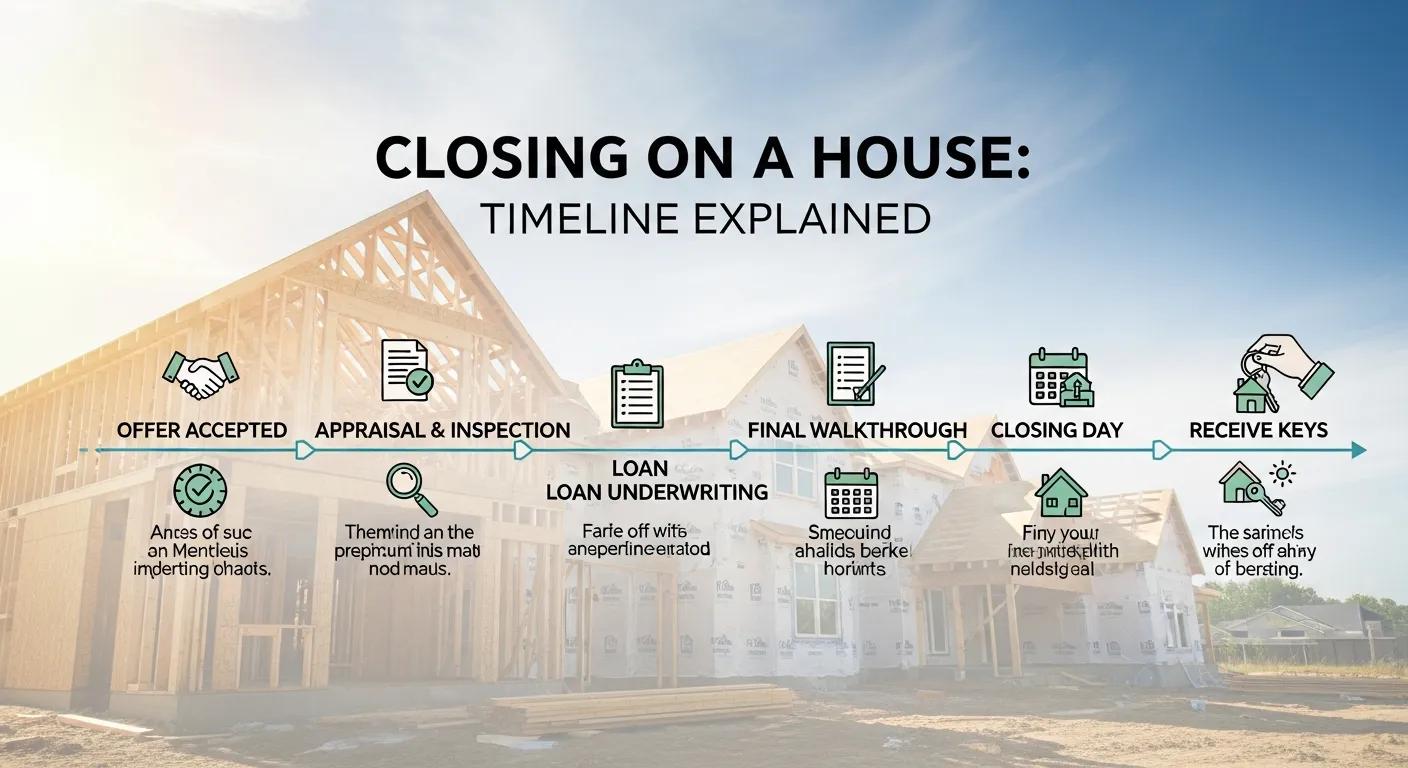
Closing on a House: Timeline Explained
Closing on a house is the final legal and financial transfer of property ownership, and it typically takes 30 to 60 days for financed purchases and 7 to 21 days for cash transactions. This guide explains the real estate closing timeline, breaks down each stage from offer acceptance to closing day, and highlights how appraisal, inspection, underwriting, title work, and closing costs affect duration. Readers will learn average timeframes by loan type, the key milestones that commonly run in parallel, and practical steps buyers and sellers can take to avoid delays. The article also includes Sarasota-specific insights and examples of how local vendor availability and market conditions shift timelines, along with a clear comparison table of loan types and expected days. If you are working with local professionals, such as Morgando Realty Services, understanding these stages helps you coordinate lenders, title companies, and inspectors to close on schedule.
What Is the Average Time to Close on a House?
The average time to close on a house depends on whether the purchase is financed or cash-based and on the loan program involved; nationally, in 2024–2025, typical financed closings range from 30 to 60 days, while cash purchases often complete in 7 to 21 days. This variation exists because mortgage-backed purchases require underwriting, appraisal, and conditional approvals that add days or weeks, whereas cash closings skip lender underwriting. Understanding average timelines helps buyers set realistic contingency periods and sellers choose appropriate contract deadlines. The following table compares common loan categories and typical closing durations to give a quick, practical reference for planning.
This comparison shows that conventional loans usually close the fastest among the financed options, while FHA and VA loans can take longer due to additional appraisal or entitlement procedures. Knowing these ranges allows you to negotiate contingency windows that align with the financing method and plan inspections and move logistics accordingly.
How Does Closing Time Vary Between Cash and Mortgage Purchases?
Cash purchases usually close much faster because there is no mortgage underwriting, lender-required appraisal conditions, or loan conditions to satisfy; that streamlines the title, escrow, and signing steps into a matter of days to a few weeks. In practice, a cash buyer who has proof of funds and a clear title search can set a closing date as soon as the title company confirms there are no liens. At the same time, financed buyers must wait for lender timelines that include appraisal scheduling and underwriting review. For example, a cash transaction with a responsive seller and an available title agent might close in 7–14 days, whereas the same property with a conventional mortgage often needs 30–45 days to complete required lender checks. Preparing documents and ordering the title early narrows the gap between cash and financed closings, helping both parties move from contract to keys more predictably.
What Are Typical Closing Timeframes by Loan Type: Conventional, FHA, and VA?
Conventional loans typically close in about 30–45 days because lenders rely on streamlined appraisals and standard underwriting guidelines, though borrower documentation or appraisal disputes can extend the timeline. FHA loans often require more stringent appraisal standards and may involve repair negotiations, which generally push closings to 45–60 days unless the buyer and seller agree to quick remedies. VA loans can also fall into the 45–60 day range due to entitlement verification and VA appraisal specifics that sometimes trigger additional paperwork or repairs. To shorten each type's timeline, buyers should secure pre-approval, provide full documentation promptly, and work with experienced local lenders who understand program nuances and common appraisal issues.
What Are the Key Stages in the Home Closing Process Timeline?
The closing process consists of several distinct stages—offer acceptance, earnest money and escrow setup, mortgage application, appraisal, inspection, underwriting, title search and clearance, and final closing day—each with expected durations and responsible parties. These stages often overlap; for example, inspections and appraisals may occur while underwriting is gathering documents, which can shorten calendar time when managed proactively. Below is a step-by-step summary suitable for planning, along with a table listing each stage, the primary party responsible, and typical duration windows to help set realistic expectations.
- Offer accepted, and escrow opened — 0–3 days.
- Mortgage application and document submission — 1–7 days
- Appraisal scheduling and report — 7–14 days
- Home inspection and negotiations — 3–14 days
- Underwriting and conditional approvals — 7–21 days
- Title search and clearing encumbrances — 7–21 days
- Final walk-through and closing coordination — 1–3 days
- Closing day signing and fund disbursement — 1 day
This chronology clarifies who is accountable at each juncture and where parallel processing can compress the calendar, which is especially useful when coordinating multiple vendors to meet a target closing date.
What Happens From Offer Acceptance to Mortgage Application?
Once an offer is accepted, the buyer typically deposits earnest money, and the escrow process begins. In contrast, the buyer submits a complete mortgage application to their lender, including pay stubs, bank statements, tax returns, and ID documentation, within the first week. The lender orders a credit report and starts the loan file; simultaneously, the buyer arranges inspections, and the seller may start compiling property disclosures, which helps several tasks progress at once. Prompt submission of required documents and immediate scheduling of appraisal and inspection appointments reduces idle time and prevents underwriting from stalling. Clear communication between the buyer, lender, and agent during these early days sets the tone for a timely underwriting review and smoother voyage toward closing.
How Do Appraisal, Inspection, and Underwriting Affect the Timeline?
The appraisal establishes the lender's assessment of property value and can delay closing if it comes in low or reveals condition issues, requiring renegotiation or supplementary funds; scheduling often takes 7–14 days, depending on appraiser availability. A thorough home inspection may uncover repair items that trigger seller concessions or repair agreements, which can add 3–14 days if negotiations or contractor quotes are needed. Underwriting is the most document-intensive phase: underwriters verify income, assets, and title status, and may issue conditions that require rapid document uploads; responding quickly to conditions generally keeps underwriting to 7–21 days. Coordinating appraisal, inspection, and underwriting in parallel reduces overall transaction duration and prevents one delayed task from cascading into multiple missed deadlines.
Which Factors Affect the Duration of Closing on a House?

Multiple factors influence closing time, including loan program specifics, lender workload, local market demand, vendor availability (appraisers, inspectors, title agents), and buyer/seller responsiveness; each can add days or weeks if not actively managed. Title issues, such as liens, judgments, or unrecorded easements, can create significant delays because they require legal resolution before funding. Seasonal peaks—such as high-demand months in Sarasota—often increase turnaround time for appraisals and inspections because vendors are booked further out. Understanding these variables enables buyers and sellers to proactively order services and set contingency windows that reflect realistic timing rather than optimistic assumptions.
- Loan type: Different programs require varying checks and conditions.
- Vendor capacity: Appraiser and inspector availability directly affects scheduling.
- Title issues: Liens or ownership defects require clearance before funding.
- Buyer/seller responsiveness: Slow document delivery causes underwriting delays.
- Local market pressure: High inventory turnover can compress negotiation timeframes.
Being aware of these top factors allows transaction participants to allocate buffer days for tasks likely to stretch, and to prioritize early actions that limit downstream hold-ups.
How Do Market Conditions and Local Sarasota Factors Impact Closing Time?
Sarasota's market dynamics—seasonal buyer influx, vacation-home demand, and periodic vendor bottlenecks—can lengthen typical closing windows when appraisers and inspectors are in high demand during peak months. Local title companies and lenders in Sarasota may experience spikes that push scheduling out by several days, and unique regional practices such as HOA documentation timelines or clerical backlogs can also add time. Working with a local real estate professional who understands Sarasota's vendor schedules helps anticipate slow periods and arrange early appointments, which reduces surprises. Morgando Realty Services leverages local knowledge and vendor relationships to coordinate appraisals, inspections, and title orders promptly, helping clients capture optimal closing dates in a shifting local market.
What Common Delays Occur and How Can They Be Prevented?
Common delays include missing loan documentation, appraisal setbacks, unresolved title defects, and repair negotiation stalls; each can be addressed with practical prevention strategies that significantly shorten resolution time. Buyers can prevent underwriting delays by pre-collecting pay stubs, tax returns, and bank statements and by avoiding major financial changes during escrow. Sellers can pre-order title work and provide full property disclosures to surface title issues early. Repair negotiations slow closings when parties wait to respond; addressing obvious maintenance items before listing or agreeing to clear contingency windows ahead of time reduces negotiation lag. Proactive communication and early ordering of third-party reports are the strongest remedies to common closing delays.
- Missing documentation: Pre-collect required lender paperwork to avoid hold-ups.
- Title defects: Order title search early and clear liens or judgments upfront.
- Appraisal issues: Provide comparable sales and property data to help appraisers.
- Repair negotiation delays: Complete obvious repairs before inspection, where feasible.
- Vendor scheduling conflicts: Book appraisers and inspectors as soon as the contract is ratified.
A checklist approach that assigns clear responsibilities and due dates for each potential delay type helps both buyers and sellers minimize weeks of unexpected extension.
How Can Buyers and Sellers Expedite the Home Closing Process?
Buyers and sellers can accelerate closing by preparing documents, selecting experienced local vendors, scheduling inspections and appraisals immediately after acceptance, and maintaining rapid communication with lenders and title companies. Pre-approval rather than pre-qualification gives underwriters an early view of borrower credentials and shortens later scrutiny. Sellers who compile HOA docs, recent utility bills, and seller disclosures before listing cut the time spent fetching paperwork during escrow. Using a coordinated plan and trusted local professionals reduces friction and allows several tasks to run in parallel, resulting in a faster move from contract to closing.
- Get fully pre-approved and compile a document packet for the lender.
- Order inspection and appraisal immediately after contract ratification.
- Provide seller disclosures and property documents to the title early.
- Choose local title and escrow providers familiar with Sarasota processes.
- Maintain daily or near-daily communication until funding clears.
- Avoid major financial changes (such as large deposits or new credit) during escrow.
These practical steps empower both sides to shave days or weeks from the typical timeline and increase the chance of meeting targeted closing dates.
What Steps Can Buyers Take to Speed Up Mortgage and Underwriting?
Buyers should assemble a complete document packet—recent pay stubs, bank statements, signed tax returns, and photo ID—before submitting a mortgage application and provide those documents promptly when the lender requests them. Avoiding new credit inquiries, large deposits without documentation, or job changes during underwriting prevents additional verification rounds. Communicate proactively with the loan officer and upload the requested items within 24–48 hours to keep the underwriter from issuing repeated conditions. Working with lenders who offer e-signature and secure document portals also shortens processing time and helps underwriters clear conditions more quickly.
How Can Sellers Prepare to Avoid Closing Delays?
Sellers can reduce delays by preparing disclosures, ordering a pre-listing title search if possible, and addressing obvious maintenance items prior to inspection to avoid protracted repair negotiations. Assembling HOA documents, recent survey and deed copies, and utility bills for the title company speeds review and reduces back-and-forth requests. Providing unobstructed access for appraisers, inspectors, and contractors helps ensure inspections occur within planned windows. Early collaboration with your agent and title company lets you anticipate and remedy minor title issues before they escalate into major closing obstacles.
What Are Closing Costs and How Do They Affect the Closing Timeline?
Closing costs are the variety of fees and prorations associated with funding and recording a purchase—title insurance, escrow fees, lender origination, appraisal, recording fees, and prorated taxes or HOA dues—and insufficient funds or last-minute disputes over who pays specific items can delay final funding. Buyers often need to produce a certified or wire-ready funds amount by a deadline set by the title company; failure to provide funds on time prevents the lender from wiring payoff amounts and delays recording. Understanding which fees are customary for buyers versus sellers in your market and confirming payment methods and timelines in advance keeps the financial side of closing predictable and on schedule.
What Typical Fees Are Included in Closing Costs?
Typical closing fees include lender origination and underwriting charges, third-party fees such as appraisal and inspection, title and escrow fees, recording fees, and prorations for property taxes and homeowner association dues; each party's responsibility varies by market custom and negotiation. Appraisal and inspection costs are usually paid upfront by buyers, while title insurance and transfer taxes may be negotiated or allocated according to local conventions. Lender fees and prepaid items (interest, insurance escrows) are calculated on the closing disclosure and must be funded at signing. Confirming expected fees early in the process gives both parties time to secure funds and avoids last-minute funding gaps that stall closings.
Do you know who is responsible for Paying Closing Costs?
Responsibility for closing costs is negotiable, but typical splits have buyers covering lender fees, appraisal, and buyer-side title endorsements, while sellers often pay owner's title insurance and transfer taxes in many markets; however, regional practices and contract terms ultimately determine the split. In negotiations, buyers may request seller concessions to cover part of the closing costs, which affects net proceeds and, if credits must be processed, the timing of funding. For Florida and Sarasota transactions, local customs and HOA requirements can shift customary responsibilities, so working with a knowledgeable agent helps clarify who pays what in the purchase contract and the closing disclosure. Clear agreement on payment sources and timing keeps the final signing focused on signatures rather than last-minute financial reconciliations.
What Are the Specifics of Closing on a House in Sarasota, Florida?

Closing in Sarasota follows standard statewide legal and title requirements but is influenced by local vendor availability, seasonal demand, and regional title practices that can alter scheduling and document expectations; understanding local rhythms is essential for realistic timelines. Sarasota's market often experiences seasonal peaks that increase demand for appraisers and inspectors, pushing scheduling out by several days during high season. Local professionals familiar with Sarasota regulations—title companies, local lenders, and experienced agents—help navigate HOA document timelines and county recording procedures to avoid surprises. Morgando Realty Services, with deep local knowledge and vendor relationships, assists clients in sequencing inspections, appraisals, and title tasks to meet desired closing dates and reduce friction.
Which Local Professionals and Services Support a Smooth Closing?
A smooth Sarasota closing depends on well-chosen local professionals: an experienced real estate agent to coordinate parties, a responsive lender familiar with regional underwriting nuances, a prompt and reliable appraiser, an inspector versed in Florida property conditions, and a title company experienced with Sarasota county recording and HOA processes. Selection criteria should include local track record, responsiveness, and familiarity with seasonal scheduling patterns so appointments happen promptly. Morgando Realty Services maintains a network of trusted local vendors and helps clients order title searches and inspections early to avoid capacity-related delays, improving the chances of a timely closing.
How Does Sarasota’s Real Estate Market Influence Closing Timelines?
Sarasota's real estate market—characterized by variable seasonal demand and a mix of primary residences and vacation properties—affects closing timelines by creating peak periods when appraisers, inspectors, and title agents are booked out, requiring earlier scheduling to meet desired closing dates. Low inventory and competitive offers may shorten negotiation windows but lengthen vendor scheduling times, creating a paradox in which faster purchase agreements coincide with longer third-party lead times. Understanding these dynamics lets buyers and sellers set contingency periods that reflect local realities rather than national averages. Leveraging local expertise, such as that offered by Morgando Realty Services, helps align contract terms with Sarasota-specific timelines and vendor availability to keep transactions on track.
Frequently Asked Questions
What Are the Common Mistakes to Avoid During the Closing Process?
Common mistakes during the closing process include failing to read the closing disclosure carefully, failing to secure necessary funds on time, and neglecting to communicate effectively with all parties involved. Buyers should ensure they understand all fees and terms outlined in the closing disclosure to avoid surprises. Additionally, not having the required funds ready can delay the closing. I want you to know that effective communication with lenders, agents, and title companies is crucial to promptly addressing issues and keeping the process on track.
How Can Buyers Ensure Their Mortgage Application Is Processed Quickly?
To expedite mortgage application processing, buyers should gather all necessary documentation in advance, including pay stubs, tax returns, and bank statements. If you submit a complete application quickly and respond quickly to any lender requests, it can certainly reduce delays. Additionally, maintaining open lines of communication with the loan officer and avoiding major financial changes during the application process can help keep everything on schedule. Pre-approval can also streamline the process by providing lenders with a clearer picture of the buyer's financial situation.
What Should Sellers Do to Prepare for Closing Day?
Sellers can prepare for closing day by ensuring all necessary documents are in order, including property disclosures, HOA documents, and any required repair agreements. They should also confirm that the property is accessible for final inspections and appraisals. Addressing any outstanding issues or repairs before closing can prevent last-minute negotiations. Also, sellers should communicate with their agent and title company to ensure all parties are aligned and ready for a smooth closing.
How Do Title Issues Impact the Closing Timeline?
Title issues can significantly impact the closing timeline, as they must be resolved before the transaction can proceed. Common title problems include liens, ownership disputes, and unrecorded easements, all of which require legal resolution. If any issues arise during the title search, they can delay the closing by days or even weeks. To mitigate this risk, buyers and sellers should order a title search early in the process and address any potential issues proactively to avoid complications at closing.
What Role Does a Real Estate Agent Play in the Closing Process?
A real estate agent plays a crucial role in the closing process by coordinating communication between buyers, sellers, lenders, and title companies. They help ensure that all necessary documents are prepared and submitted on time, and they can assist in negotiating any last-minute issues that may arise. Additionally, an experienced agent can provide valuable insights into local market conditions and help manage expectations regarding timelines and potential delays, ultimately facilitating a smoother closing experience.
What Are the Consequences of Delays in the Closing Process?
Delays in the closing process can lead to various consequences, including increased costs, potential loss of the property, and strained relationships between buyers and sellers. For buyers, delays may result in additional fees or the need to extend temporary housing arrangements. Sellers may face complications if they have already committed to a new property or have other contractual obligations. Moreover, prolonged negotiations can create frustration and uncertainty, making it essential for all parties to work proactively to avoid delays.
Conclusion

Understanding the closing timeline for a house is crucial for both buyers and sellers, as it directly impacts the overall transaction experience. By being aware of the average durations and key stages, you can coordinate effectively with local professionals to ensure a smooth process. Taking proactive steps, such as gathering necessary documents and scheduling inspections early, can significantly reduce delays. If you would like more insights and resources to support your home-closing journey, explore our comprehensive guides today.

Gina Morgando is a licensed Broker & Realtor serving Sarasota, Manatee, and Palm Beach Counties. With over 10 years of experience, she helps buyers, sellers, and investors make confident real estate decisions across Florida.